
Table of Contents
- Why the Quality Difference in Activist Apparel Matters
- What Is GSM in T-Shirt Quality?
- Screen Printing vs Direct to Garment Durability
- Ethical Manufacturing Standards for Apparel
- How to Evaluate Activist Apparel Before You Buy
- Reviewing Correct Geography: Quality in Practice
- Common Mistakes When Buying Activist Apparel
- Frequently Asked Questions
Last Updated: September 14, 2026
Why the Quality Difference in Activist Apparel Matters
A shirt that carries a political message has to survive more than a washing machine. It has to survive being read. That is the core of the quality difference in activist apparel: a garment that fades, cracks, or twists out of shape stops communicating long before it stops being wearable. At Correct Geography, we print place names that were correct for centuries, so we think a lot about permanence. Below, we break down fabric weight, print durability, ethical sourcing, and how to judge a tee.
Most buyers focus on the slogan. People who wear these shirts for years focus on fabric weight, ink, and stitching.
What Is GSM in T-Shirt Quality?
GSM (grams per square meter) measures fabric density. A higher GSM means a heavier, denser knit that holds its shape and resists becoming see-through.
A standard 4.5 oz/yd² tee converts to roughly 153 g/m², the band where many ring-spun cotton activist tees land. Heavier knits above 180 g/m² trap heat; lighter knits under 140 g/m² show wear faster.
How Fabric Weight Affects Wear and Message Longevity
Fabric weight determines how a print ages. A denser knit gives the ink a more stable surface, so the graphic resists stretching and cracking; a thin, loosely knit shirt flexes with every movement, breaking the print down.
Weight also affects how the shirt reads on a body: a 153 g/m² ring-spun cotton tee holds enough structure to look intentional rather than like a giveaway shirt.
Screen Printing vs Direct to Garment Durability
Screen printing and direct-to-garment (DTG) differ in how ink bonds to fabric, and that difference shows up in the wash. Screen printing pushes a thicker ink layer through a mesh stencil, creating a durable deposit on top of the weave. DTG sprays ink into the fibers, which feels softer but sits closer to the surface.
Neither method is automatically better; the deciding factors are ink type, curing temperature, and fabric preparation. Print durability is measurable, and the numbers separate a shirt that survives a march, a wash cycle, and a second summer from one that cracks quickly.
Ink Deposit, Mesh Count, and the Physics of a Print
A screen-printed graphic is a physical layer of plastisol or water-based ink cured onto the fabric, and its thickness is set by mesh count: a 110-mesh screen lays down a heavy deposit for bold color blocks, while a 305-mesh screen lays down a thin, detailed deposit for fine linework. Heavier deposits resist abrasion but crack when the fabric stretches; thinner deposits flex with the knit but fade faster.
DTG works differently: a printer jets water-based ink into the cotton fibers and cures it with a heat press, so the ink penetrates rather than sits on top. The trade-off is that DTG ink sits in the top few fiber layers and wears away as they abrade. On a 153 g/m² ring-spun cotton tee, a properly pretreated DTG print holds up well for casual wear; on a lighter, loosely knit blank, it can look washed out within a dozen cycles.
Cure Temperature, Wash Resistance, and Print Longevity
Ink adhesion is the bond between the print and the cotton. A properly cured plastisol or water-based ink on ring-spun cotton survives repeated washing without cracking; an under-cured print looks fine in the bag and fails in the dryer. Plastisol cures when the ink film reaches roughly 320°F throughout; water-based inks cure at lower temperatures but need full evaporation of the carrier.
Wash resistance comes down to three habits:
- Turn the shirt inside out before washing
- Use cold water and a gentle cycle
- Skip the dryer or use low heat
Print longevity also depends on placement. Prints that cross seams or stretch across the shoulder flex constantly and crack first. A centered chest print on a quarter-turned garment, where the body panel is rotated to remove the center crease, sits flatter and lasts longer.
What Protest Environments Actually Do to a Print
A shirt worn to a rally, a march, or a long day on your feet gets stretched across the shoulders, rubbed against backpack straps, exposed to sweat and sunscreen, and washed hard the next morning. That durability test favors three properties: a stable knit underneath, a cured ink layer that flexes without fracturing, and a design that avoids large solid blocks where the ink film is thickest.
Text-only prints, simple linework, and flat color hold up better than photographic DTG output or full-bleed gradients. That is a materials fact: the thinner and more uniform the ink film, the less internal stress it carries when the fabric moves.
American Apparel and Footwear Association guidance on textile care labeling
Ethical Manufacturing Standards for Apparel
Ethical manufacturing standards for apparel cover wages, working hours, safety, and the right to organize. In the United States, the Fair Labor Standards Act administered by the Department of Labor sets the federal floor on minimum wage and overtime, and the Occupational Safety and Health Administration governs workplace safety in domestic cut-and-sew operations.
For imported garments, the U.S. Customs and Border Protection forced labor enforcement blocks goods made with forced labor from entering the country. That enforcement is the practical backstop behind claims about labor rights in a supply chain you cannot see.
"Ethical" is not a single certification. A factory can pay fair wages and still run unsafe equipment; a brand can source organic cotton and still underpay its cutters. Ask which standard applies, and who verified it.
How to Verify a Labor Claim Instead of Trusting It
A labor claim is only as good as the paper trail behind it. The useful question is not "is this brand ethical?" but "what can this brand actually show me?" Four tiers of evidence, weakest to strongest:
- A statement on the website. A brand says it works with fair-wage factories. No names, no locations, no audit. This is marketing, not verification.
- A named factory and location. The brand can tell you which facility cut and sewed the garment and where it sits, the minimum bar for a serious claim, because it makes the claim checkable.
- A third-party audit or certification. Programs like Fair Trade Certified, Worldwide Responsible Accredited Production (WRAP), and SA8000 send independent auditors into factories on a schedule. Not a guarantee of perfection, but someone outside the brand looked.
- A published supplier list with audit dates. The strongest tier: the brand names its Tier 1 (cut-and-sew) and sometimes Tier 2 (fabric mill) suppliers and dates the most recent audit.
A common pattern is partial disclosure: a brand names its fabric mill but not its cut-and-sew shop, or cites a certification covering only one facility in a multi-facility supply chain. Not automatically a red flag, but a brand that answers directly is worth more than one that deflects.
Reading a Certification Without Getting Fooled
Certifications cover different things, and conflating them is the most common buyer error. A certification covering cotton growing (organic fiber standards) says nothing about the wages of the people who sewed the shirt; one covering factory labor conditions says nothing about pesticides. A brand can hold one and imply it holds the other.
When you see a certification logo, ask three questions: What does it actually cover? Which facility does it apply to? When was the last audit? A certification without a date is a snapshot of a factory that may have changed since.
The Domestic Alternative and Its Limits
Domestic cut-and-sew operations fall under FLSA and OSHA, so wage and safety violations are enforceable by federal agencies rather than only by the brand's promises. That is a real verification advantage: a buyer can check OSHA inspection records for a named domestic facility. The limits are cost and capacity, domestic sewing costs more per unit, which is part of why a domestically printed shirt often costs more than an imported one of similar fabric weight.
Occupational Safety and Health Administration establishment search for inspection records
How to Evaluate Activist Apparel Before You Buy
Judge activist apparel on four measurable things: fabric weight, stitch quality, print method, and sourcing disclosure. Everything else is marketing.
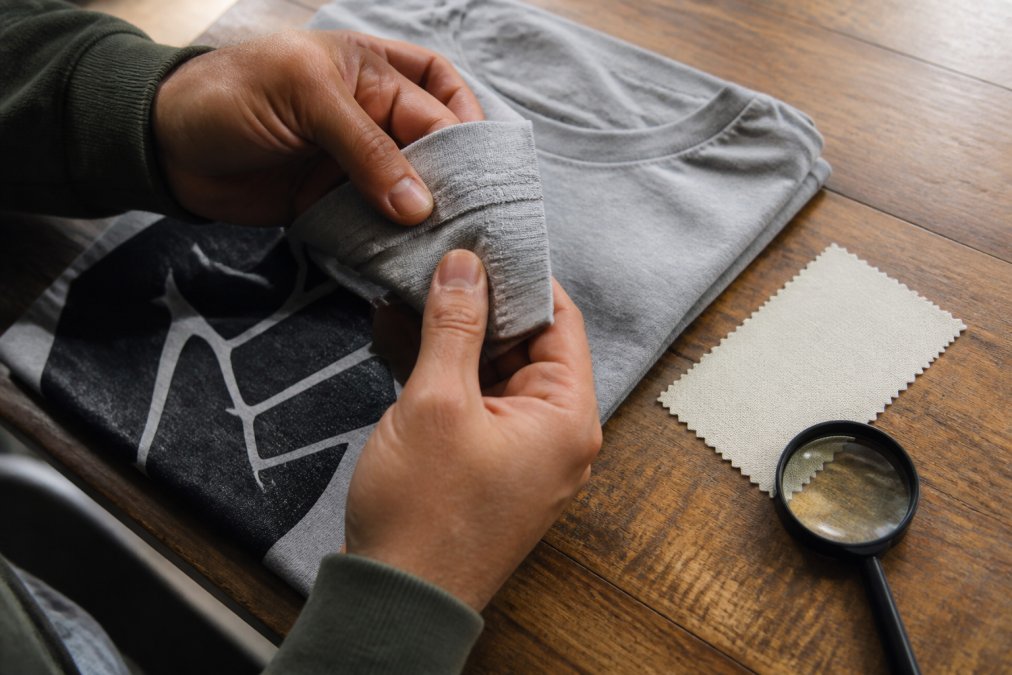
Start with the tag. A listing that names fabric weight, cotton type, and construction details has nothing to hide; one that says "soft cotton" and stops there is telling you something too.
Then check the construction:
- Double-stitched neckline and sleeves resist stretching at the stress points
- Shoulder-to-shoulder taping keeps the neckline from sagging
- Quarter-turned panels prevent the shirt from twisting after washing
- Ring-spun cotton feels smoother and prints more cleanly than open-end cotton
Supply Chain Transparency and Cost-Per-Wear
Supply chain transparency means the brand can name where the cotton was grown, where the fabric was knit, and where the garment was printed. Few brands can.
Cost-per-wear is the more useful number: divide the price by the times you realistically wear the shirt. A $25 shirt worn 80 times costs about 31 cents per wear; a $12 shirt that fades by wash ten and is retired after 20 wears costs 60 cents per wear.
Reviewing Correct Geography: Quality in Practice
Correct Geography prints three designs, all on the same 4.5 oz/yd² ring-spun cotton blank at $25.00, with identical construction: double-stitched neckline and sleeves, shoulder-to-shoulder taping, and quarter-turned panels. Each shirt is printed to order.
Corrected Names Tee
The Corrected Names Tee carries three place names with the corrections marked in red. It runs $25.00 on 100% ring-spun cotton, with heather colorways shifting to cotton-poly blends. The text-only design is the easiest kind of print to keep sharp: no gradients, no large solid blocks that crack at the edges.

Gulf of Mexico - Since 1552 Tee
The Gulf of Mexico - Since 1552 Tee borrows the layout of a vintage souvenir shirt, a smart choice for durability: souvenir-style prints use simple linework and flat color, which hold up better than photographic DTG output. Same $25.00 price, same blank, same construction.

Denali - The Great One Tee
The Denali - The Great One Tee is the strongest test of print longevity in the lineup because it pairs a headline with supporting text. Small text is where cheap printing fails first. On a 153 g/m² ring-spun blank with proper curing, it holds. It also lists at $25.00.

| Shirt | Fabric | Weight | Construction | Price |
|---|---|---|---|---|
| Corrected Names Tee | 100% ring-spun cotton | 4.5 oz/yd² (153 g/m²) | Double-stitched, taped, quarter-turned | $25.00 |
| Gulf of Mexico - Since 1552 Tee | 100% ring-spun cotton | 4.5 oz/yd² (153 g/m²) | Double-stitched, taped, quarter-turned | $25.00 |
| Denali - The Great One Tee | 100% ring-spun cotton | 4.5 oz/yd² (153 g/m²) | Double-stitched, taped, quarter-turned | $25.00 |
Common Mistakes When Buying Activist Apparel
The first mistake is buying on the strength of the message alone. A slogan you agree with on a shirt that pills after a month is a shirt you stop wearing, and the message goes with it.
The second is assuming price equals quality. Plenty of expensive activist apparel uses the same blanks as budget brands and charges for the design.
The third mistake is ignoring care instructions. Most print failures are dryer failures. Cold wash, inside out, hang dry, and a well-made print outlasts the trend that inspired it.
The hard part of buying activist apparel is that conviction is easy to print and hard to keep. A message only works if the shirt survives long enough to be read, which makes fabric weight, ink adhesion, and stitch quality the real measure of whether a purchase was worth it. Correct Geography prints original place names on 4.5 oz/yd² ring-spun cotton with double-stitched necklines and sleeves, shoulder-to-shoulder taping, and quarter-turned panels to prevent twisting, all printed to order at $25.00. If you want a shirt built to carry its message past the first dozen washes, browse the Correct Geography collection and pick the correction you want to wear.
Frequently Asked Questions
What is the 3-3-3 rule for clothing?
The 3-3-3 rule is a wardrobe guideline suggesting you keep three weeks of everyday clothes, three months of seasonal items, and three years of occasional wear. For activist apparel, it means buying pieces durable enough to last through repeated wear and washing. A shirt with double-stitched seams and proper ink adhesion will outlast a cheap alternative, making the rule achievable without constant replacements.
Is 240 GSM good quality for activist t-shirts?
Yes, 240 GSM (about 7.1 oz/yd²) is considered heavyweight and durable. For comparison, Correct Geography tees use 4.5 oz/yd² (153 g/m²), which is a lightweight ring-spun cotton suited for warm weather and layering. Higher GSM generally means thicker fabric, better opacity, and longer garment longevity, but it also feels warmer. The right choice depends on your climate and how you plan to wear the shirt.
How can you tell if a garment is ethically manufactured?
Look for specific disclosures: factory names, third-party certifications, and published codes of conduct. Ethical manufacturing standards for apparel include fair wages, safe working conditions, and no child labor. Brands that print on demand, like Correct Geography, reduce textile waste by making items only when ordered. If a brand cannot tell you where its shirts are made, that is a red flag for supply chain transparency.
What is the difference between direct-to-garment and screen printing for protest shirts?
Screen printing pushes ink through a mesh screen, creating a thick, durable layer that resists cracking over many washes. Direct-to-garment (DTG) prints ink directly onto the fabric, which works well for detailed or full-color designs but can fade faster. For bold slogans and high-contrast activist messaging, screen printing can offer good wash resistance and ink adhesion, especially on 100% ring-spun cotton.
Does higher price always equate to better quality in activist clothing?
No. Price can reflect brand positioning, limited runs, or political niche appeal rather than measurable quality. A $25 tee from Correct Geography uses ring-spun cotton, shoulder-to-shoulder taping, and double-stitched necklines, which are concrete quality indicators. Compare fabric weight, stitch quality, and print method instead of assuming price equals quality.