
Last Updated: November 1, 2026
Quick Summary
Ten original indigenous names for North American regions include Denali (Athabascan, "The Great One"), Nunangat (Inuit, "our homelands"), Abya Yala (Guna, "land in full maturity"), Anahuac (Nahuatl, "land between the waters"), Lenapehoking (Lenape homeland), Dinétah (Navajo land), Tsenacommacah (Powhatan, "densely inhabited land"), S'ólh Téméxw (Stó:lō, "our land"), O'odham Jewed (Tohono O'odham, "the people's land") and Mi'kma'ki (Mi'kmaq territory). Each name belongs to a specific nation and language, not to Indigenous peoples as a whole.
- Each regional name belongs to a specific nation and language, not a single continent-wide culture.
- Denali means "The Great One" in Athabascan and was officially restored in 2015.
- Lenapehoking covers the region around present-day New York City, New Jersey and eastern Pennsylvania.
- Tsenacommacah's gloss comes from colonial-era records rather than a living speaker tradition.
- The U.S. Board on Geographic Names decides official names for federal geographic features.
Table of Contents
- Why Indigenous Names for Regions Matter More Than You Think
- Indigenous Place Names in North America: How to Read Them
-
10 Original Indigenous Names for North American Regions
- 1. Denali (Athabascan): The Great One
- 2. Nunangat (Inuit): The Inuit Homelands
- 3. Abya Yala (Guna): The Land in Full Maturity
- 4. Anahuac (Nahuatl): The Land Between the Waters
- 5. Lenapehoking (Lenape): The Lenape Homeland
- 6. Dinétah (Navajo): The Navajo Land
- 7. Tsenacommacah (Powhatan): The Densely Inhabited Land
- 8. S'ólh Téméxw (Stó:lō): Our Land
- 9. O'odham Jewed (Tohono O'odham): The People's Land
- 10. Mi'kma'ki (Mi'kmaq): The Mi'kmaq Territory
- Native American Place Names and Meanings: What the Words Actually Translate To
- Indigenous Place Name Restoration: From Maps to Signage to Shirts
- Common Mistakes When Researching Original Names
- Wear the History: Choosing a Correct Geography Tee
- Frequently Asked Questions
Why Indigenous Names for Regions Matter More Than You Think
Most maps show you where you are. Very few tell you what a place was called before someone else decided to rename it.
That gap matters. Across North America, countless regions carry names given by European mapmakers, surveyors, and politicians.
Here is the core idea: an Indigenous regional name is not just a label.
We have spent a lot of time digging through language records, tribal sources, and historical maps for our own work.
Indigenous Place Names in North America: How to Read Them
Reading Indigenous place names in North America starts with one rule: a name belongs to a language, and a language belongs to a people. You cannot separate the two. But the second rule is just as important for this list: scale matters. A name for a river, a town, or a mountain is not the same as a name for a region, and mixing the two is the most common way articles on this topic go wrong.
Here is what to keep in mind:
- Names come from specific nations, not "Native Americans" as a whole. Each has its own language, grammar, and history. Athabascan, Inuktitut, Nahuatl, Lenape, and Halq'eméylem are not related languages, and their place-name systems work differently.
- Regional names describe a homeland, a territory, or a broad landscape. A regional name typically covers a area a nation associated with a people, a language family, or a confederation, not a single landmark. Denali names a mountain and the high country around it; Lenapehoking names a homeland that spans parts of three present-day states.
- Spelling varies because orthographies vary. You will see the same name written several ways across maps, treaties, and tribal records. Some writing systems use apostrophes and accent marks that carry meaning, S'ólh Téméxw and Dinétah are not decorative spellings.
For readers who want to go deeper on the subject, these Indigenous geography learning resources are a solid starting point.
10 Original Indigenous Names for North American Regions
Here are ten original Indigenous names for North American regions, each tied to a specific nation and language. We list them with pronunciation help and meaning. Treat this as a starting map, not the final word.
1. Denali (Athabascan): The Great One
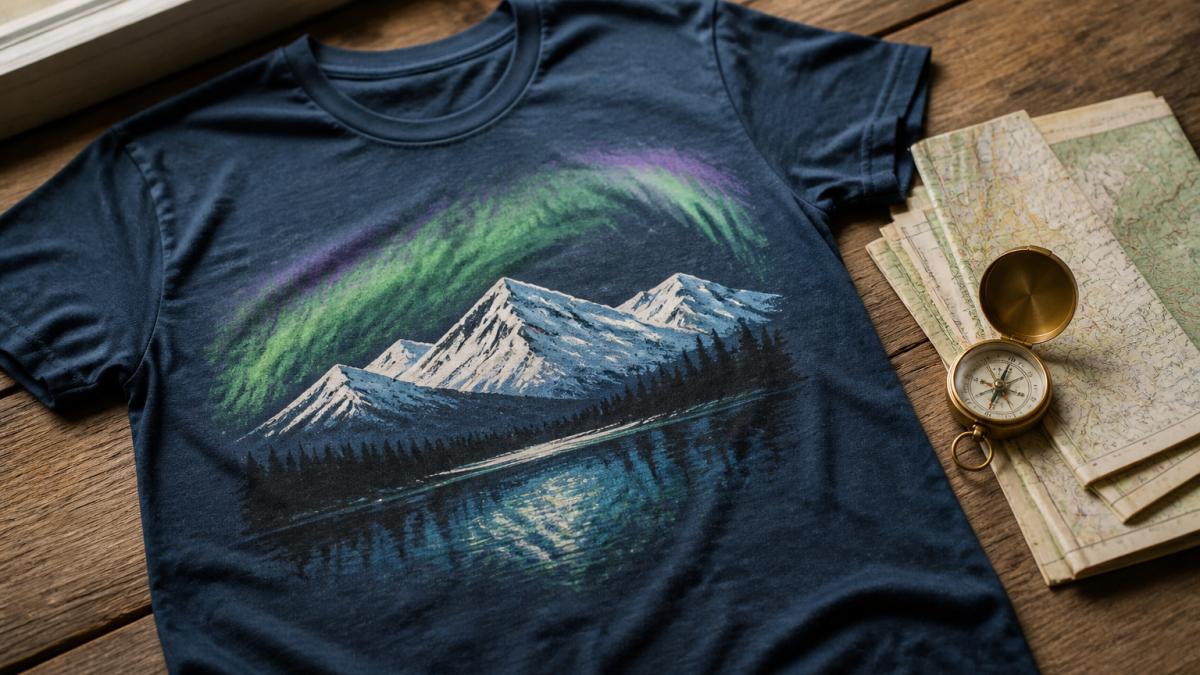
Denali means "The Great One" in the Athabascan language of Alaska Native peoples. Pronounce it deh-NAH-lee. The name refers to the mountain, and it is used for the surrounding high country as well. Our Denali - The Great One Tee carries that name and history.

2. Nunangat (Inuit): The Inuit Homelands
Nunangat means "the land" or "our homelands" in Inuktitut. Pronounce it noo-NAH-ngat. It describes the Inuit regions across the Arctic, spanning Canada and parts of the far north. The word centers the land itself, not a border drawn on a map.
3. Abya Yala (Guna): The Land in Full Maturity
Abya Yala comes from the Guna people of what is now Panama and Colombia. Pronounce it ah-BEE-ah YAH-lah. It translates roughly to "land in full maturity" or "land of vital blood." Many Indigenous groups across the Americas use it as an alternative name for the whole hemisphere.
4. Anahuac (Nahuatl): The Land Between the Waters
Anahuac is a Nahuatl term meaning "land between the waters." Pronounce it ah-nah-WAHK. It described the Valley of Mexico and the lands around it, the heartland of Nahua civilization before European contact.
5. Lenapehoking (Lenape): The Lenape Homeland
Lenapehoking means "homeland of the Lenape people." Pronounce it len-ah-pay-HOH-king. It covers the region around what is now New York City, New Jersey, and eastern Pennsylvania. The Lenape are the original people of that land.
6. Dinétah (Navajo): The Navajo Land
Dinétah means "among the People" or "the land of the Navajo." Pronounce it dih-NEH-tah. It names the traditional homeland of the Navajo Nation in the Four Corners region.
7. Tsenacommacah (Powhatan): The Densely Inhabited Land
Tsenacommacah means "densely inhabited land" in the Powhatan language. Pronounce it sen-ah-KOM-ah-kah. It described the territory of the Powhatan Confederacy in what is now Virginia.
8. S'ólh Téméxw (Stó:lō): Our Land
S'ólh Téméxw means "our land" in the Halq'eméylem language of the Stó:lō people. Pronounce it roughly s-ohl TEM-ekh. It names the Stó:lō territory in the Fraser Valley region.
9. O'odham Jewed (Tohono O'odham): The People's Land
O'odham Jewed means "the land of the people" in the O'odham language. Pronounce it oh-OH-dahm heh-WED. It describes the traditional territory of the Tohono O'odham Nation in the Sonoran Desert.
10. Mi'kma'ki (Mi'kmaq): The Mi'kmaq Territory
Mi'kma'ki means "the land of the Mi'kmaq." Pronounce it mig-MAH-gee. It names the Mi'kmaq homeland across what is now the Canadian Maritimes and parts of the northeastern United States.
| Name | Nation | Meaning | Approximate Pronunciation |
|---|---|---|---|
| Denali | Athabascan | The Great One | deh-NAH-lee |
| Nunangat | Inuit | Our homelands | noo-NAH-ngat |
| Abya Yala | Guna | Land in full maturity | ah-BEE-ah YAH-lah |
| Anahuac | Nahua | Land between the waters | ah-nah-WAHK |
| Lenapehoking | Lenape | Lenape homeland | len-ah-pay-HOH-king |
| Dinétah | Navajo | Land of the People | dih-NEH-tah |
| Tsenacommacah | Powhatan | Densely inhabited land | sen-ah-KOM-ah-kah |
| S'ólh Téméxw | Stó:lō | Our land | s-ohl TEM-ekh |
| O'odham Jewed | Tohono O'odham | The people's land | oh-OH-dahm heh-WED |
| Mi'kma'ki | Mi'kmaq | Mi'kmaq territory | mig-MAH-gee |
Native American Place Names and Meanings: What the Words Actually Translate To
Native American place names and meanings rarely translate cleanly into English. A single word can carry a description, a relationship, and a history all at once. That is why a sourced list should tell you not just what a name means, but how well that meaning is documented.
Take Denali. "The Great One" is a fair translation, but it also carries a sense of awe and respect for the mountain. That nuance does not survive a one-word gloss.
A common mistake is treating a translation as the whole meaning. It is not. When you research these names, look for the source language, the nation that uses it, and the context. Here is how the ten names in this list break down on that front:
- Well documented in community usage: Denali (Athabascan), Nunangat (Inuit), Lenapehoking (Lenape), Dinétah (Navajo), Mi'kma'ki (Mi'kmaq). These are names communities use today for their own homelands, and the general sense of each is widely agreed.
- Documented but with competing glosses: Abya Yala (Guna) is often translated as "land in full maturity" or "land of vital blood"; both circulate, and the difference matters. Anahuac (Nahuatl) is usually glossed as "land between the waters," but the geographic extent it described is debated among historians.
- Approximate or inferred translations: Tsenacommacah (Powhatan) is commonly rendered "densely inhabited land," a gloss that comes from colonial-era records rather than a living speaker tradition. S'ólh Téméxw (Stó:lō) is usually given as "our land," which is accurate but general. O'odham Jewed (Tohono O'odham) is a straightforward possessive construction, "the people's land", but the English phrasing flattens the O'odham sense of belonging.
Our article on the meaning behind Indigenous place names digs into this further.
Indigenous Place Name Restoration: From Maps to Signage to Shirts
Restoring Indigenous place names happens in several places at once. It shows up on official maps, on road signs, in national parks, and on the clothes people wear.
The U.S. Board on Geographic Names is the federal body that decides official names for geographic features.
For a wider look at how names changed over time, see original names of U.S. landmarks before the rename.
Common Mistakes When Researching Original Names
The biggest mistake people make is assuming one name fits a whole continent. It does not. Each name belongs to a nation, a language, and a specific region.
Here are the traps to avoid:
- Treating all Indigenous names as one language. They are not. Athabascan, Inuktitut, Nahuatl, and Lenape are unrelated.
- Skipping the nation. Always name the people who use the word.
- Trusting a single translation. Meanings are often debated, even among speakers.
- Ignoring spelling variants. Different sources spell the same name differently.
Watch out: relying on a random listicle with no source will get you a wrong name and a wrong nation. Check language records and tribal sources when you can.
Wear the History: Choosing a Correct Geography Tee
Choosing a geography tee comes down to accuracy, materials, and whether the name on the shirt is sourced correctly.
Here is what to check before you buy:
- Is the name tied to a specific nation? It should be.
- Is the spelling consistent with the source language? Look for a stated source.
- What is the fabric? Our tees use 100% ring-spun cotton at 4.5 oz/yd², with double-stitched necklines and sleeves.
- Is it printed to order? Ours are.
Our shirts cost $25.00. We print on soft, lightweight ring-spun cotton with shoulder-to-shoulder taping and a quarter-turned cut to prevent a center crease.
If you want practical ways to honor Indigenous history beyond a shirt, these seven everyday ways to honor Indigenous history are worth a read.
Frequently Asked Questions
What are some Indigenous names for places in North America?
There are hundreds, and they range from individual peaks to whole regions. Denali (Athabascan) names North America's tallest mountain, Lenapehoking describes the Lenape homeland around the lower Hudson and Delaware valleys, and Dinétah refers to Navajo country in the Four Corners area. Abya Yala, used by the Guna people, names the entire hemisphere. Each name belongs to a specific nation and language, so attribution matters as much as the translation.
What do Native American place names and meanings actually translate to?
Translations vary by language and by source. Denali is usually rendered as 'The Great One.' Anahuac (Nahuatl) is often translated as 'land between the waters.' Tsenacommacah (Powhatan) is commonly given as 'densely inhabited land.' Some meanings are contested because early colonial recorders wrote down approximations. Treat any single translation as one interpretation, not a settled fact, and check which nation's language the word comes from.
How can I find the original Indigenous name for a region?
Start with the tribal nations whose traditional territory covers that region, then check their official websites, cultural departments, and language programs. University libraries and state historical societies hold early maps and language records. The Native Land Digital map is a useful starting point for territory boundaries, but confirm names with the nation itself. Spelling and pronunciation often differ between colonial records and community usage, so prefer the community's current form.
Why do some North American places have more than one Indigenous name?
North America has hundreds of Indigenous languages across many language families, and neighboring nations often had different names for the same river, mountain, or region. A place can also carry a name in the local language and a separate descriptive term used by traders or allies. Restoration efforts sometimes choose one form for signage, which can leave other valid names out. That overlap is a sign of linguistic diversity, not an error.
The history under these names is real, and getting it right takes care. If you want to wear a name that carries its source with it, start with Correct Geography. Our tees use sourced names, ring-spun cotton, and print-on-demand production. Get started with Correct Geography and wear a name that was there first.
