
Table of Contents
- Why Geographic Names Are Being Changed
- The Role of the U.S. Board on Geographic Names
- Damnatio Memoriae: The Ancient Precedent for Erasing Names
- The Controversy Over Renaming Historical Sites
- Are Historical Names Being Erased, or Just Updated?
- Digital Preservation vs. Physical Renaming
- Global Case Studies: Renaming Beyond the United States
- The Psychological Impact of Historical Erasure
- Frequently Asked Questions
Last Updated: September 12, 2026
Why Geographic Names Are Being Changed
Whether historical names are being erased sits at the center of a fierce national argument, and both sides are partly right. Names change for mundane reasons: languages shift, borders move, spelling conventions drift. What unsettles people is when a rename looks less like organic evolution and more like a decision made in a conference room.
That distinction runs through this guide from Correct Geography: how renames happen, what the U.S. Board on Geographic Names does, why ancient Rome offers the clearest precedent, and where the line falls between erasing history and updating it.
The Mechanics of a Rename
A geographic rename is a formal administrative process: someone petitions a naming authority, that authority reviews the proposal against existing policy, and a decision is issued and recorded.
The practical steps look like this:
- A proposal is submitted with supporting documentation
- The relevant state or tribal authority reviews it
- Public comment is collected where required
- A federal board votes on the change
- The new name is published in the official geographic names database
Once published, the change propagates through maps, signage, and federal records, which is why a single vote can feel like a sweeping erasure.
Recent Federal Renames in Practice
Recent federal renames have moved faster and drawn more attention than the routine corrections that once dominated the process. A change is announced, agencies update their systems, and the public discovers the shift only after it appears on a map. That lag is where most of the controversy lives: people rarely object to the mechanics, but they object to learning about a change after it has already happened.
The Role of the U.S. Board on Geographic Names
The U.S. Board on Geographic Names standardizes place names across government use. It does not invent names; it adjudicates among competing proposals and maintains the official record other agencies follow.
The Board's stated purpose is consistency, not politics. In practice, every name it approves carries political weight, because a federal map name becomes the default in classrooms, atlases, and search results.
How a Name Actually Gets Changed
A name gets changed through a documented petition and review cycle, not a decree. According to the U.S. Board on Geographic Names domestic names process, proposals are evaluated against principles that favor historical usage, local preference, and established spelling.
Those principles sound neutral until you apply them. When historical usage and current local preference conflict, someone has to choose, and that choice is where the controversy over renaming historical sites begins.
Damnatio Memoriae: The Ancient Precedent for Erasing Names
Damnatio memoriae is the Latin term for the deliberate erasure of a person's name and image from official records after death. The Roman Senate applied it to emperors and officials deemed to have disgraced the state, chiseling their names off monuments and striking them from inscriptions. Erasing names is not a modern invention, it is one of the oldest tools of political memory, and it almost never worked completely. Roman stonemasons sometimes recarved rather than destroyed, leaving ghost outlines historians later recovered.
That is the lesson worth carrying forward: erasure of a name rarely erases the record. It relocates it.
The Controversy Over Renaming Historical Sites
The controversy over renaming historical sites is less about the names than about who holds the authority to change them. Supporters frame renames as corrections aligning public memory with historical accuracy; opponents frame them as political discourse dressed up as housekeeping. Both have merit: a name honoring a figure now understood differently can feel like an endorsement the public no longer gives, and a name changed by administrative vote can feel imposed rather than earned. The fight is rarely about the specific name, it is about institutional memory and who controls it.
The Authority Question, Made Concrete
Every rename resolves one question: who has standing to decide? In the United States that authority is layered, and the layers explain most of the conflict.
- Federal features. The U.S. Board on Geographic Names holds final say over names used on federal maps and in federal records. It can act on a petition from a state, a tribe, or a federal agency, and it can also act on its own initiative.
- State features. Many states run parallel naming boards or historical commissions that must weigh in before a federal proposal advances. A state that objects can stall a rename for years.
- Local features. Streets, schools, parks, and municipal buildings are usually named by city councils, school boards, or parks departments, bodies that answer to voters, not to a federal board.
- Tribal names. Federally recognized tribes can petition the Board directly, and the Board's principles give weight to tribal historical usage. That pathway is one reason several long-disputed renames finally moved.
The Denali case shows how those layers interact. The mountain had been called Mount McKinley on federal maps since 1917, though Alaska Native people and the state had used Denali far longer. Alaska petitioned repeatedly for decades; the Board declined for years, citing established usage. In 2015 the Secretary of the Interior used administrative authority to rename the peak Denali, and the Board updated the federal record. In 2025 the name was changed back to Mount McKinley by executive action, and the Board updated its database again. The mountain did not move. The authority did.
Why the Same Rename Can Feel Like Two Different Acts
A rename arriving through a public petition, comment period, and recorded vote reads as legitimate even to those who disagree with the outcome. A rename arriving through an executive action or agency memo reads as imposed, even when the reasoning is identical. Process is not a side issue, it is the substance. A community that was consulted will defend a name it dislikes; a community that was not will resist a name it agrees with.
The Identity Cost Nobody Prices In
The angle most coverage skips is what a rename does to the people who live under it. Place names function as shared reference points, they anchor directions, addresses, school districts, and local history. When one disappears, residents report a genuine sense of dislocation even when nothing physical has changed.
That reaction is not nostalgia, and it is not partisan. It reflects how tightly place names are bound to civic identity. The National Park Service guidance on cultural landscapes treats place names as part of a site's cultural heritage, which is why preservation planning accounts for naming alongside buildings and terrain. A rename that ignores that dimension can be administratively correct and socially costly at the same time.
| Situation | Likely Outcome | What It Signals |
|---|---|---|
| Name updated, old name archived | Historical record preserved | Update, not erasure |
| Name changed, no archival trace | Record lost | Genuine erasure |
| Local name restored after petition | Community preference honored | Recontextualization |
| Federal name imposed without comment | Public backlash likely | Political discourse |
| Tribal name adopted through Board petition | Historical usage recognized | Recontextualization |
Are Historical Names Being Erased, or Just Updated?
Are historical names being erased, or just updated? The distinction turns on whether the old name survives in historical records. An update preserves the prior name in archives, footnotes, and databases. An erasure removes it.
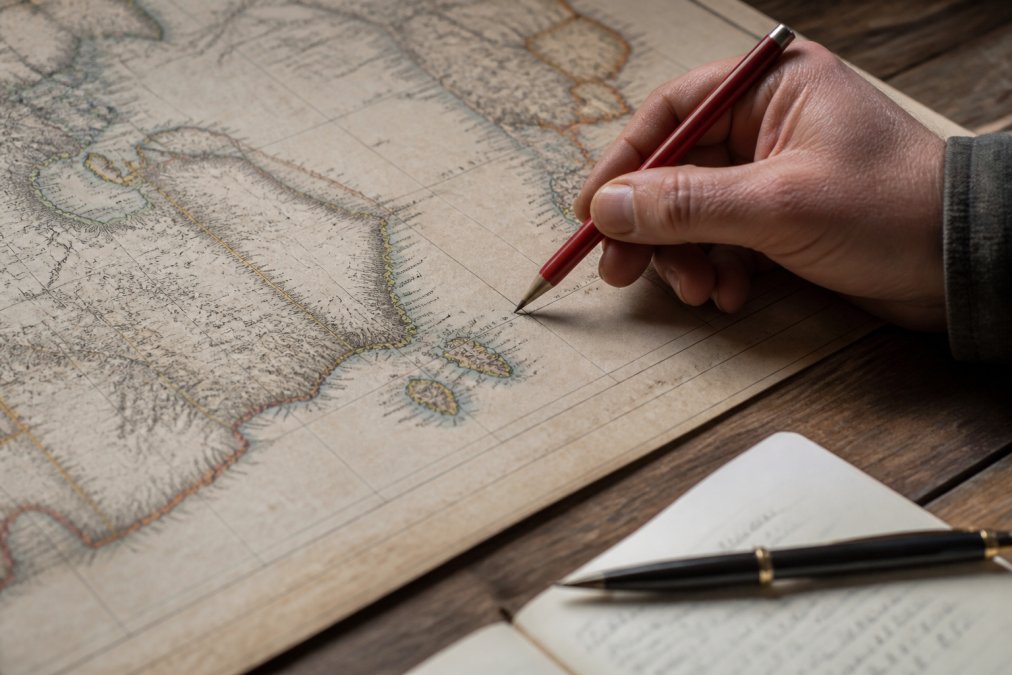
Erasing History vs. Updating Narratives
Updating a narrative means adding context; erasing history means removing the record. A renamed feature that still documents its former name in official databases has been updated, not erased. But public perception rarely tracks that nuance: when signage changes overnight and the old name vanishes from view, the experience is indistinguishable from erasure, whatever the archive holds.
Digital Preservation vs. Physical Renaming
Digital preservation has changed the stakes. A physical sign can be replaced in an afternoon, but the old name persists across scanned atlases, GPS databases, and archived federal records, often indefinitely. The physical landscape shows one name while the digital record shows several, and which you encounter depends on where you look. The practical takeaway: the record is more durable than the sign.
Global Case Studies: Renaming Beyond the United States
Renaming is a global phenomenon, and looking abroad clarifies what is at stake. Cities, rivers, and mountains have been renamed after independence movements, regime changes, and language reforms on every continent. The pattern repeats: a new name signals a new political order, while the old name survives in historical records and in the speech of people who lived under it. The names change; the collective memory does not. Most coverage stays inside one country's borders, but the international record shows the same mechanics under very different political systems, and separates genuine erasures from routine updates.
Post-Soviet Renaming: Reversal, Not Erasure
After the Soviet Union dissolved in 1991, cities and streets across the former republics were renamed at scale. Leningrad became Saint Petersburg again, restoring a pre-revolutionary name; Stalingrad had already become Volgograd in 1961; streets named for Soviet figures were renamed for national poets, saints, and independence leaders. Almost none of this was erasure in the archival sense, the old names remained in atlases, literature, and residents' memories. What changed was which name appeared on the sign. When a name is restored rather than deleted, the record is not damaged but reordered.
Post-Colonial Renaming: The Long Tail
Across Africa and South Asia, independence brought a wave of renames that continues today. Colonial-era names gave way to indigenous, pre-colonial, or independence-era names, sometimes immediately, sometimes after decades of petitioning. The pattern is a long tail rather than a single event: a country may rename its capital's main avenue in year one and still debate a provincial city's name forty years later. That slow pace shows renaming is rarely a clean break and more often a negotiation that never fully concludes.
What the International Cases Teach
Three lessons carry back to any domestic debate:
- Restoration is not erasure. When a pre-existing name is reinstated, the record is preserved, not destroyed.
- Speed drives backlash. Renames pushed through quickly generate resistance regardless of the political system that produced them.
- The old name persists in speech. People who lived under a former name often keep using it for the rest of their lives, which means the "erasure" is rarely as complete as it appears on a map.
The Psychological Impact of Historical Erasure
The psychological impact of historical erasure is the angle most coverage skips. When a familiar name disappears, people report a genuine sense of dislocation, a feeling that the ground beneath them has shifted even though nothing physical changed.
That reaction is not nostalgia. It reflects how deeply place names are tied to identity and civic engagement. A name is a shared reference point, and removing it forces a community to rebuild a piece of its common language.
The National Park Service guidance on cultural landscapes treats place names as part of a site's cultural heritage, which is why preservation planning accounts for naming alongside buildings and terrain.
| Situation | Likely Outcome | What It Signals |
|---|---|---|
| Name updated, old name archived | Historical record preserved | Update, not erasure |
| Name changed, no archival trace | Record lost | Genuine erasure |
| Local name restored after petition | Community preference honored | Recontextualization |
| Federal name imposed without comment | Public backlash likely | Political discourse |
The real challenge is that most people encounter a name change only after it is done, with no clear record of what the name used to be. Correct Geography exists for exactly that gap. Our Corrected Names Tee prints the original names with the corrections marked in red, our Gulf of Mexico - Since 1552 Tee marks nearly five centuries of a name that never needed fixing, and our Denali - The Great One Tee honors the name Alaska Native people used long before anyone in Washington weighed in. Each is available for $25.00. Get started with Correct Geography and wear the name that was there first.


Frequently Asked Questions
What is it called when history is erased?
The formal term is damnatio memoriae, Latin for "damnation of memory." Ancient Rome used it to strike emperors and officials from public records after they fell out of favor. Today, scholars use it for any deliberate removal of a person, event, or place from collective memory. The practice shows up in monument removal, archival silence, and geographic nomenclature changes. It matters because historical records shape how future generations understand what happened and who mattered.
Who decides when a historical name should be changed?
In the United States, the U.S. Board on Geographic Names handles federal naming for geographic features. The board reviews proposals from federal agencies, state governments, tribes, and the public, then votes on whether to approve a change. State and local governments control their own landmarks, schools, and streets. Private institutions like museums and universities set their own policies. The process varies widely depending on whether the name sits on public lands, private property, or federal maps.
How does renaming landmarks impact local identity?
Renaming a landmark can reshape how residents describe where they live. A mountain, river, or building often carries stories tied to indigenous roots, settler history, or civic pride. When a name changes, some residents feel their cultural heritage is being overwritten. Others see the change as correcting a historical wrong. The tension between these views shows up in public discourse, local elections, and even souvenir merchandise. The impact depends on how much the community was involved in the decision.
How can I preserve original place names if they keep changing?
You can document names through photographs, personal archives, and community records. Digital preservation tools let you store historical maps and oral histories that outlast any single renaming decision. Wearing apparel that displays original names, like the Gulf of Mexico - Since 1552 Tee from Correct Geography, keeps the conversation visible. The key is treating place names as part of cultural heritage worth recording, regardless of what any administration decides.