
Table of Contents
- Niche Political Clothing: What Are You Actually Paying For?
- The Real Cost Breakdown: $10 Tee vs. $25 Tee
- Social Impact: Does Wearing Your Politics Change Minds?
- Best Shirts for Political Expression in 2026: What to Look For
- The Risks: Polarization, Regret, and the Office
- How to Start a Political Clothing Brand Without Wasting Money
- The Verdict: Who Should Buy and Who Should Skip
- Frequently Asked Questions
Last Updated: September 7, 2026
Niche Political Clothing: What Are You Actually Paying For?
Buying niche political clothing is worth it when the shirt carries a specific, historically grounded message you genuinely want to communicate, rather than a generic slogan that blends into the noise. The value is not in the fabric alone; it is in the precision of the statement and the identity it projects.
Political clothing is a form of visual communication that signals your values before you say a word. The best shirts work like an inside joke: instant recognition with allies, ambiguity enough to avoid confrontation with everyone else.
The Real Cost Breakdown: $10 Tee vs. $25 Tee
The difference between a $10 shirt and a $25 shirt comes down to construction, print quality, and longevity, not just the message on the chest. A budget tee typically uses thinner cotton that loses its shape after a few washes, and the print often cracks or peels within months (consumerreports.org). A $25 shirt, by contrast, usually features a heavier fabric weight, a softer hand-feel, and a print that survives dozens of cycles in the machine.
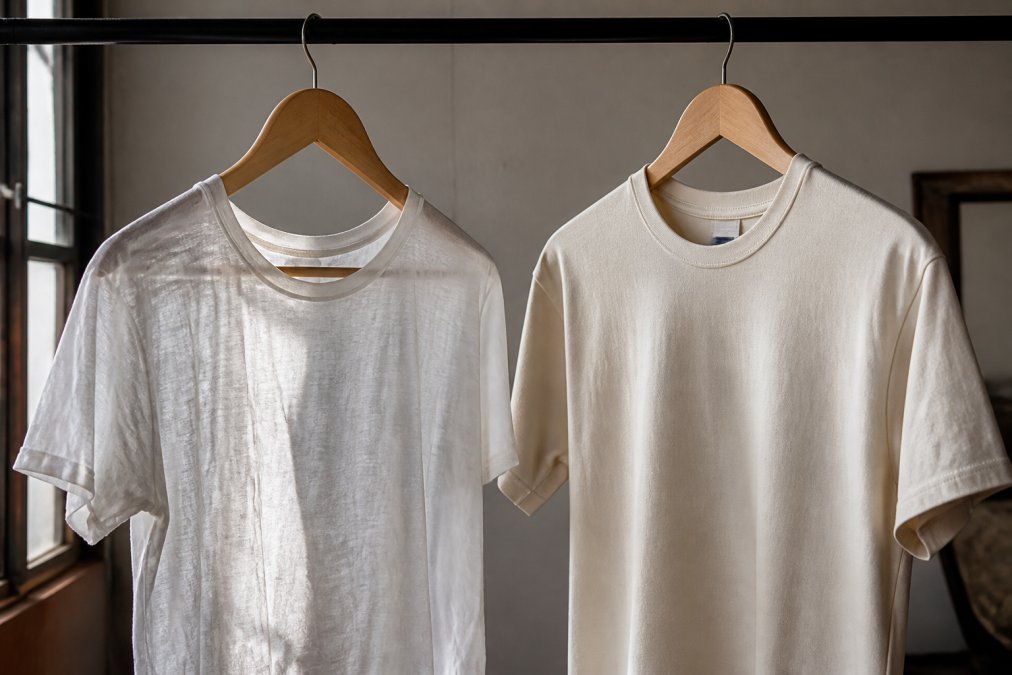
Paying more also buys quality control and a design that has been properly licensed or vetted. The print-on-demand market is flooded with low-effort designs using stolen artwork or sloppy typography; a misspelled slogan undermines your entire point.
Social Impact: Does Wearing Your Politics Change Minds?
Wearing a political shirt rarely changes someone's vote, but it does serve a different and valuable purpose: it identifies you to your community and normalizes your position in public spaces. The primary audience for your shirt is not the person who disagrees with you; it is the person who agrees but feels alone. Seeing a stranger wearing a shirt that validates their views can be a small but meaningful moment of solidarity.
Who Actually Buys Niche Political Clothing
The core repeat customer is not the young, loud activist. The buyer is often between 35 and 60, politically engaged, and signaling affiliation without street-level activism, often professionals who cannot wear a slogan to work but reclaim their identity on the weekend. The trigger is rarely anger; it is a desire for belonging or a need to process a news event that feels absurd.
This buyer is quality-sensitive because they are not buying a disposable costume but a garment that must survive a dinner with in-laws or a casual Friday at a client site. The $25 shirt with a subtle reference outperforms the $10 shirt with a shout: the $10 signals impulse, the $25 signals conviction.
The Psychological Cost of Being a Walking Statement
The social consequences are not uniform. In casual settings, a niche shirt acts as a filter: it attracts the people you want to talk to and repels those you do not. In professional settings, the calculus changes, a 2025 survey of hiring managers found a majority would hesitate to advance a candidate who wore overt political messaging to an interview, even if they agreed (shrm.org). The risk is not the opinion but the perceived lack of judgment about context.
There is also the fatigue of being "on." A shirt with a pointed historical reference implicitly invites conversation; for some this is energizing, for others it is exhausting to explain the joke for the third time in one grocery trip. The wearer must be prepared to represent their own views, not just wear a shirt.
The Solidarity Effect vs. The Backfire Effect
The most concrete benefit of wearing political clothing is the solidarity effect: it signals to like-minded strangers that they are not alone, a well-documented form of "identity signaling" that strengthens in-group bonds (apa.org). The most significant risk is the backfire effect, where the shirt provokes a hostile interaction that leaves the wearer more isolated. The difference is often determined by design specificity: a generic slogan invites generic conflict; a specific, historically grounded reference invites curiosity before argument.
In an era of intense polarization, publicly stating your position through apparel is low-stakes activism, but the impact is diluted when the message is generic. A shirt that says "Resist" without context is easy to ignore; one that references a specific historical or geographical correction invites a question and a conversation. The latter is worth the money because it builds community rather than broadcasting a mood.
Best Shirts for Political Expression in 2026: What to Look For
The best political shirts for 2026 prioritize wit, specificity, and historical grounding over loud, reactive graphics. Consumers are moving away from the chaotic energy of the last election cycle and toward designs that feel timeless and repeat-wearable. When evaluating a shirt, consider whether the message will still make sense in two years and whether you would feel comfortable wearing it to a casual dinner with mixed company.
The Corrected Names Tee: A Case Study in Subtlety
The Corrected Names Tee from Correct Geography is a prime example of this new wave. Priced at $25, it features three recent place-name changes (the Gulf of Mexico, Kennedy Center, and Lake Ontario) with the "corrections" highlighted for anyone struggling to keep up. It is a shirt for people who understand the absurdity of renaming geography for political points, and it does not require a single explicit slogan to make its argument.

The Gulf of Mexico - Since 1552 Tee: Vintage Aesthetics Meet Modern Politics
The Gulf of Mexico - Since 1552 Tee takes a different approach by leaning into a vintage 1970s-80s souvenir shirt aesthetic. The design celebrates nearly five centuries of history for a body of water. This shirt works because it looks like a piece of coastal memorabilia until you read the fine print; the political commentary is embedded in the historical timeline, not shouted from the chest.
| Shirt | Price | Message Style | Best For |
|---|---|---|---|
| Corrected Names Tee | $25 | Subtle, list-based | People who want a conversation starter |
| Gulf of Mexico - Since 1552 Tee | $25 | Vintage, historical | Those who prefer aesthetic over slogans |
The Risks: Polarization, Regret, and the Office
The biggest risk with niche political clothing is not the statement itself but the regret of buying a shirt too tied to a single news cycle: you wear it twice, the discourse moves on, and it feels dated. Designs rooted in history or long-standing principles outperform those tied to a specific scandal or tweet.
There is also the professional risk. Many workplaces frown upon overt political messaging, and a controversial shirt can create tension with colleagues or clients. Before buying, consider your environment; in a politically mixed office, reserve your most pointed shirts for weekends. The goal is to express your identity, not to make your workplace uncomfortable.
But the risk landscape is broader than social awkwardness and a dated closet. Two categories almost never discussed can cost you money or a legal headache: copyright and trademark infringement, and the reputational risk of wearing a co-opted design.
The Legal Minefield: Likeness, Slogans, and Fair Use
Most consumers assume buying a political shirt is risk-free. It is not. For the buyer, the risk is low but not zero: you are unlikely to be sued for wearing a shirt, but you may be wearing one produced illegally, funding a designer who stole someone else's work.
For the seller, the risks are significant. Using a political figure's likeness without permission can run afoul of right of publicity laws, which vary by state. Campaign slogans are often trademarked; using them without authorization invites a cease-and-desist letter. The USPTO database is full of registered political slogans, and their owners are often aggressive about enforcement.
The Co-optation Risk: When Your Shirt Means Something You Did Not Intend
A less obvious but equally serious risk is co-optation. A symbol or phrase with a clear meaning can be adopted by a different faction, and your shirt suddenly says something you never intended. The Gadsden flag, once a mainstream libertarian symbol, is now associated with positions at odds with its original meaning. If you buy a shirt with a historical reference, be sure it has not been re-appropriated by a group you do not want to be associated with.
This is why specificity matters: a shirt referencing a specific, verifiable historical event or geographical correction is harder to co-opt than one using a broad symbol. The more precise the message, the less room for misinterpretation; the more generic the symbol, the more likely it is to be claimed by someone else.
The Office: A Case-by-Case Calculation
The office calculation is about the power dynamics of your specific workplace. In a politically mixed environment, a shirt subtle enough to be missed by most people is safe; one that requires a second look is a risk; one immediately legible as a political statement is a liability. Treat your wardrobe like a spectrum: reserve the most pointed designs for known audiences and keep neutral, historically grounded pieces for mixed company. The Corrected Names Tee, for example, reads as a quirky geography reference to most; only those paying close attention catch the political edge. That is the sweet spot for the office.

How to Start a Political Clothing Brand Without Wasting Money
Starting a political clothing brand requires design specificity and a clear understanding of your audience, not just a desire to print a slogan. Print-on-demand has lowered the barrier to entry but saturated the market with low-quality, derivative designs.
Define your niche: who is your customer, what do they care about, and what message are they not finding elsewhere? Invest in original design work, either by hiring a freelance designer or developing a strong typographic style yourself. Order samples of every product and test print quality against real-world wear. A common mistake is launching with 20 designs; launch with three to five excellent ones that have a cohesive identity.
The Verdict: Who Should Buy and Who Should Skip
Niche political clothing is worth it for the person who understands the message, enjoys subtlety, and wants to signal values to a specific community without shouting. It is especially worth it when the design is historically accurate and well-constructed, remaining wearable long after the news cycle fades. For this buyer, a $25 shirt from a brand like Correct Geography is a better investment than three $10 shirts from a generic merch site.
Skip niche political clothing if you want a mass-market statement piece everyone will immediately understand, or if you regret purchases that require explanation. If you are not comfortable being a walking conversation starter or cannot tolerate the occasional hostile stare, save your money. The psychological impact of wearing your politics is real and not for everyone. But for those who enjoy subtle reference and historical correction, the right shirt is worth every dollar.
Frequently Asked Questions
Does wearing political clothing actually influence public opinion?
Political clothing rarely changes a stranger's mind, but it acts as a signal to those who share your views. It can start conversations, create a sense of community, and show solidarity. The value is less about conversion and more about expression. If you are buying a shirt to debate opponents, you may be disappointed. If you are buying it to feel authentic and find your people, it works well for that purpose.
Are there legal considerations for selling political merchandise?
Yes, if you plan to sell, avoid using copyrighted logos, campaign trademarks, or official seals. Using a politician's name in a satirical or commentary context is generally protected, but selling counterfeit goods is not. For a small brand, the biggest risk is using a graphic that belongs to someone else, so stick to original designs or historical references.
How can you identify high-quality activist apparel brands?
Check the fabric weight first; look for 4.5 oz or heavier cotton. Look for direct-to-garment (DTG) printing that uses water-based inks, which last longer than vinyl. Read reviews that mention shrinkage and fading.
How do you style political apparel for professional settings?
For casual Fridays, layer a political tee under a blazer or a denim jacket to keep it work-appropriate. For a fully professional environment, skip the slogan tee and opt for a subtle accessory like a pin or a bracelet. The goal is to express your values without forcing a conversation in a client meeting. If you work in a politically divided office, you will likely prefer the subtle route.
The decision to wear your politics is a personal one, and the market now offers options that reward thoughtfulness over volume. Correct Geography builds shirts for people who value historical accuracy and wit, with designs like the Corrected Names Tee and the Gulf of Mexico - Since 1552 Tee that make their point without a single profanity. Get started with Correct Geography and wear a shirt that proves you know the original name.